Heavy structures out, site reset to specification
Veltrixair Industries clears industrial sites of old crane structures, foundations, embedded steelwork and supporting infrastructure. We handle hazmat properly, document every scrap stream, and restore the surface to your specification. From taking the steel out to putting the surface back, it's one contract, and our accountability doesn't stop at the gate.
Four categories. One accountable scope
Site clearance is more than just steel. A complete removal covers the crane structure itself, the concrete and civil work beneath it, the auxiliary equipment that ran it, and the surface restoration that hands the site back to you. Veltrixair Industries owns all four parts under one project director, so nothing falls into a gap between contractors.

Crane Steel
Runway beams, gantry frames, support columns, bracing, tie-backs and access platforms.
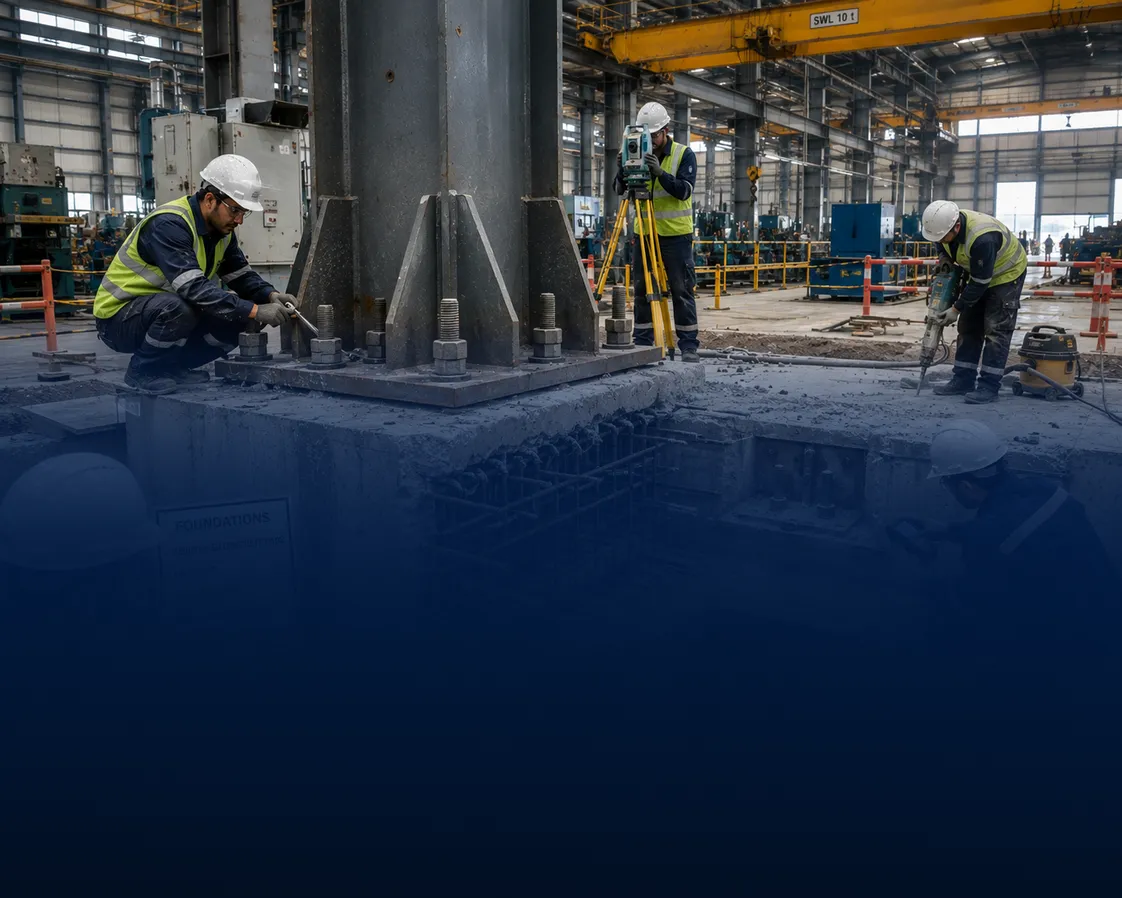
Foundations
Reinforced concrete pads, pile caps, anchor bolts, embedment plates and rebar extraction.
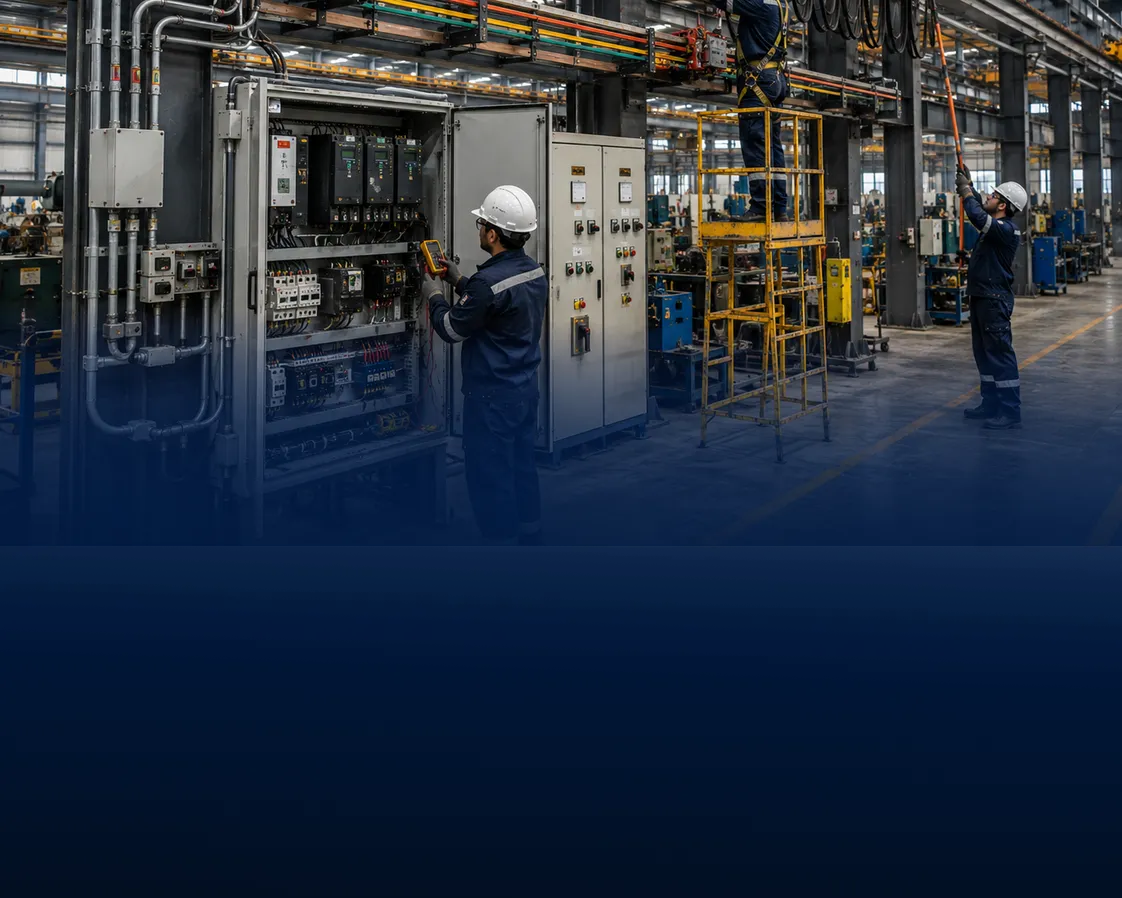
Auxiliaries
Cable trays, festoon systems, control panels, conductor bars, switchgear and conduits.
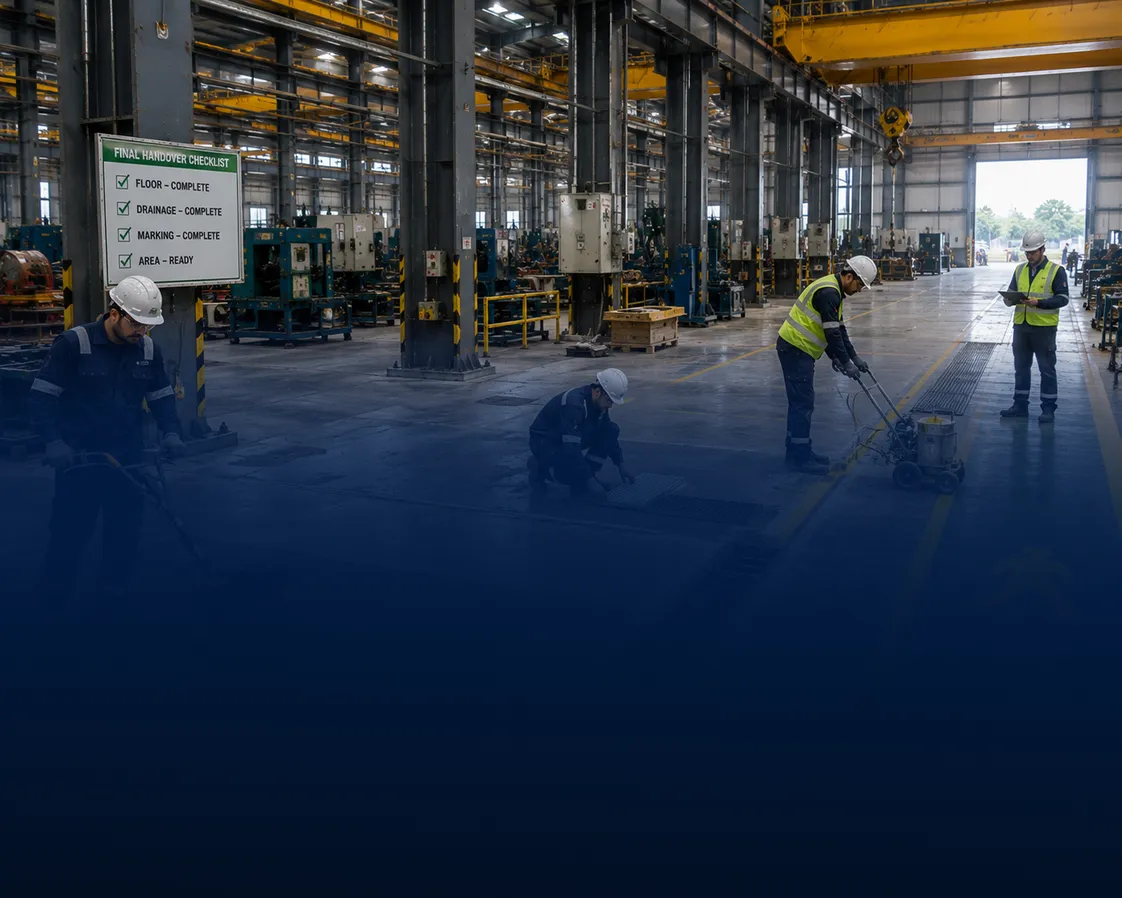
Surface & Civil
Floor patching, drainage restoration, paving, line-marking and final handover finish.
What's included in a Veltrixair Industries clearance
We deliver removal as one complete scope — from the first survey to final handover, from taking out the steel to restoring the surface. Here's what's standard, whether it's a stand-alone project or follows directly after one of our dismantling jobs.
Pre-removal site survey & utility mapping
Topographic survey, GPR scanning of underground services, identification of buried utilities (power, water, gas), and mapping of what stays versus what comes out.
Hazmat survey & containment plan
Lead-based paint testing, asbestos register review, contaminated soil identification, and containment plan design for any regulated material before it's disturbed.
Method statement & permitting
RAMS submission, hot work permits, demolition permits, oversize-load route permits, waste manifests and notification to Civil Defence where major operations require formal alert.
Heavy structural cutting strategy
Selection of cutting method per structure: oxy-fuel torch, plasma, mechanical shear, hydraulic cropping or controlled drop — calibrated to thickness, alloy and adjacent-asset proximity.
Steel sectioning & cropping
Cutting structural members into transportable lengths per heavy-haul route limits, with cut-pattern engineered to preserve scrap value and minimise re-handling on site.
Mobile crane support for heavy lifts
Sectioned beams and columns lowered with mobile crane support — never dropped onto the deck, never impact-damaged, always laid down per the engineered sequence.
Concrete demolition & foundation breakout
Pneumatic breaking, hydro-demolition or mechanical pulverisation per spec — controlled excavation around embedded reinforcement, dust suppression, and noise management.
Anchor bolt extraction & embedment removal
Anchor bolts cut flush or extracted, embedment plates removed, and surface rendered to client-specified finish — typically flush concrete with no protruding hardware.
Cable, panel & auxiliary stripping
Controlled de-energization, cable tray and festoon system removal, control panel and switchgear takeout, conduit clearance — with electrical isolation verified before work proceeds.
Scrap classification & weighbridge documentation
Steel sorted by alloy class (carbon, alloy, stainless, copper-bearing components), weighbridge tickets retained, certified scrap-yard delivery and rebate / credit reconciliation against contract.
Oversize-load transport & route permits
Heavy-haul logistics, road permits coordinated with Saudi authorities, escort coordination where required, and delivery to designated scrap processor or storage facility.
Final site restoration & handover
Surface levelling, concrete patching, paving repair, drainage flow check, line-marking restoration, photographic record of as-handed-back state, and signed-off handover certificate.
Three clearance profiles
How we plan a clearance project depends on its size, complexity, and what's around it. We've handled everything from a single workshop crane to multi-crane plant shutdowns on major operational sites.
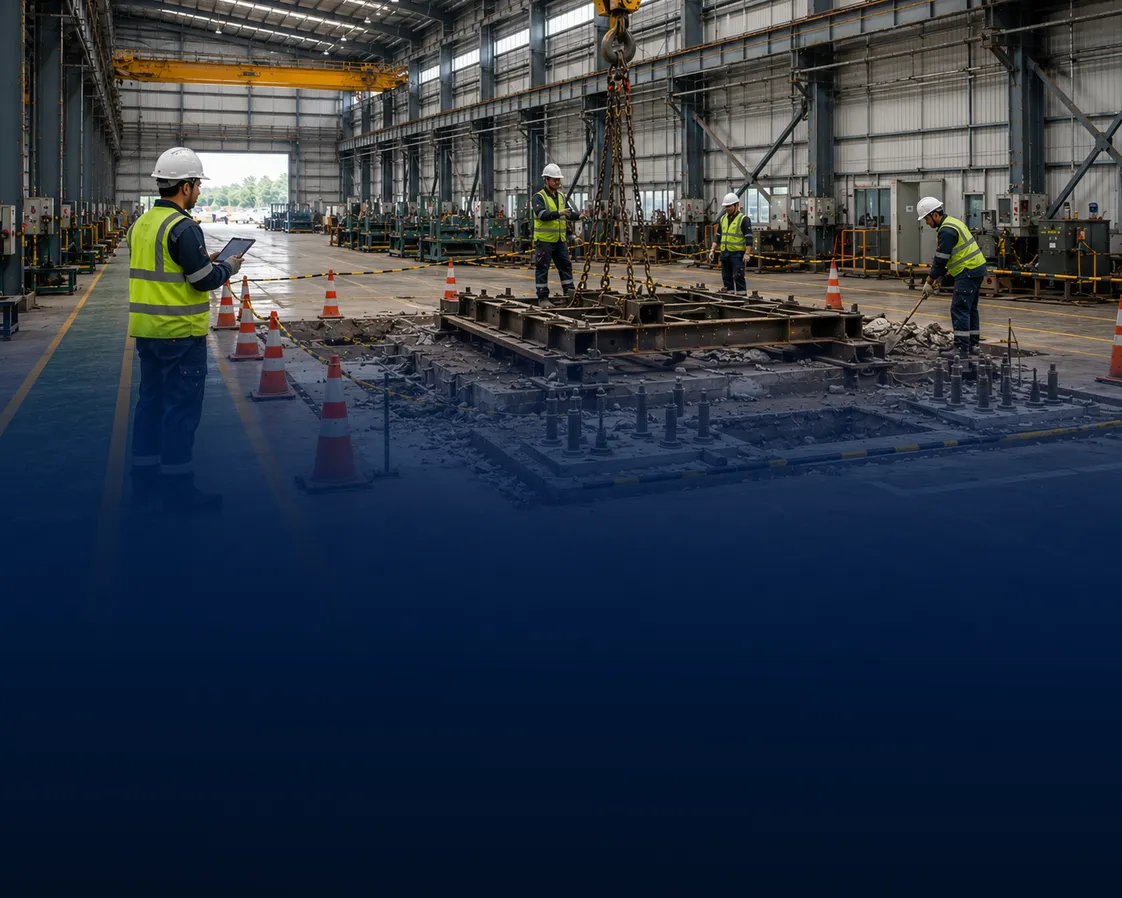
Single-Structure Removal
One crane and its supporting steel and foundation — contained scope, single mobilization, typically completed within 1-3 weeks depending on tonnage.
- Single mobilization
- 1 — 3 week window
- Contained footprint
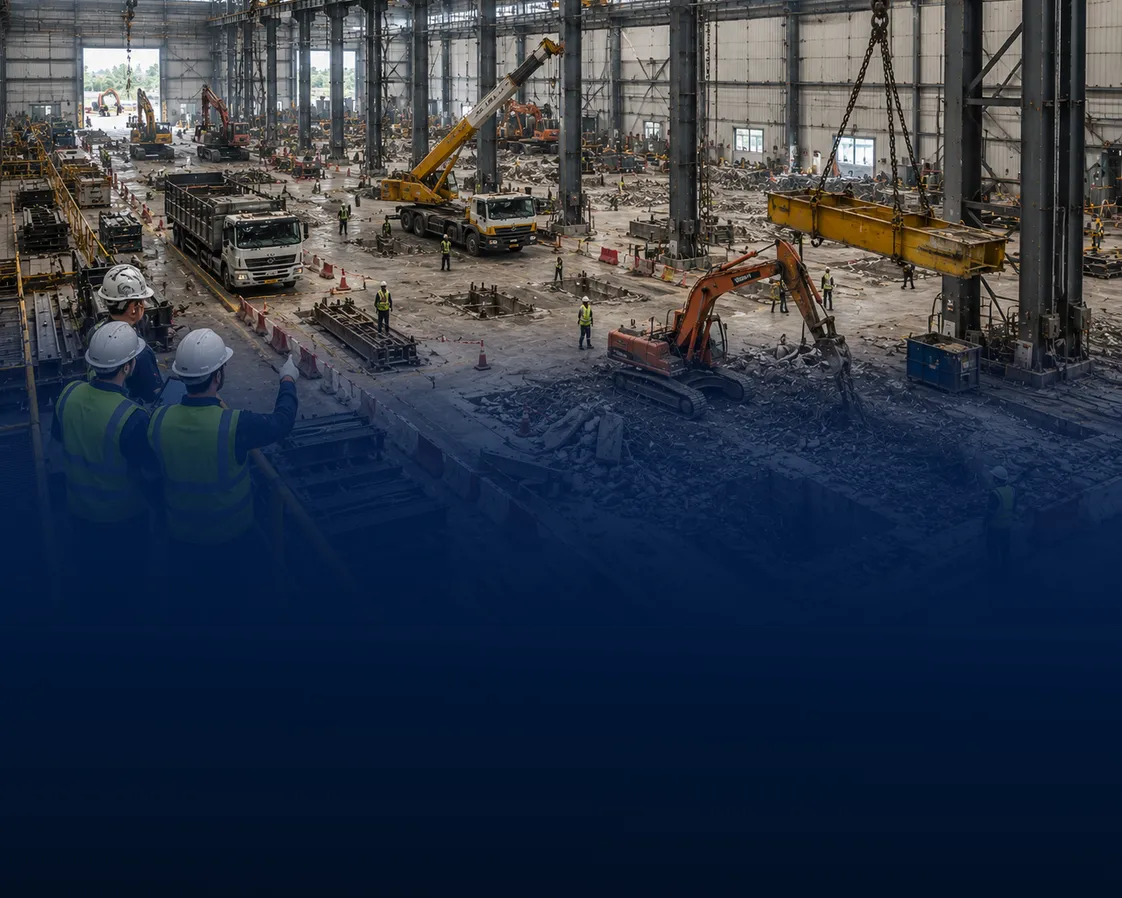
Multi-Crane Plant Decommissioning
Coordinated programme across multiple cranes and supporting structures within a single facility — often phased to coordinate with adjacent civil and demolition contractors.
- Phased multi-crane scope
- Coordinated programme
- Civil demolition interface
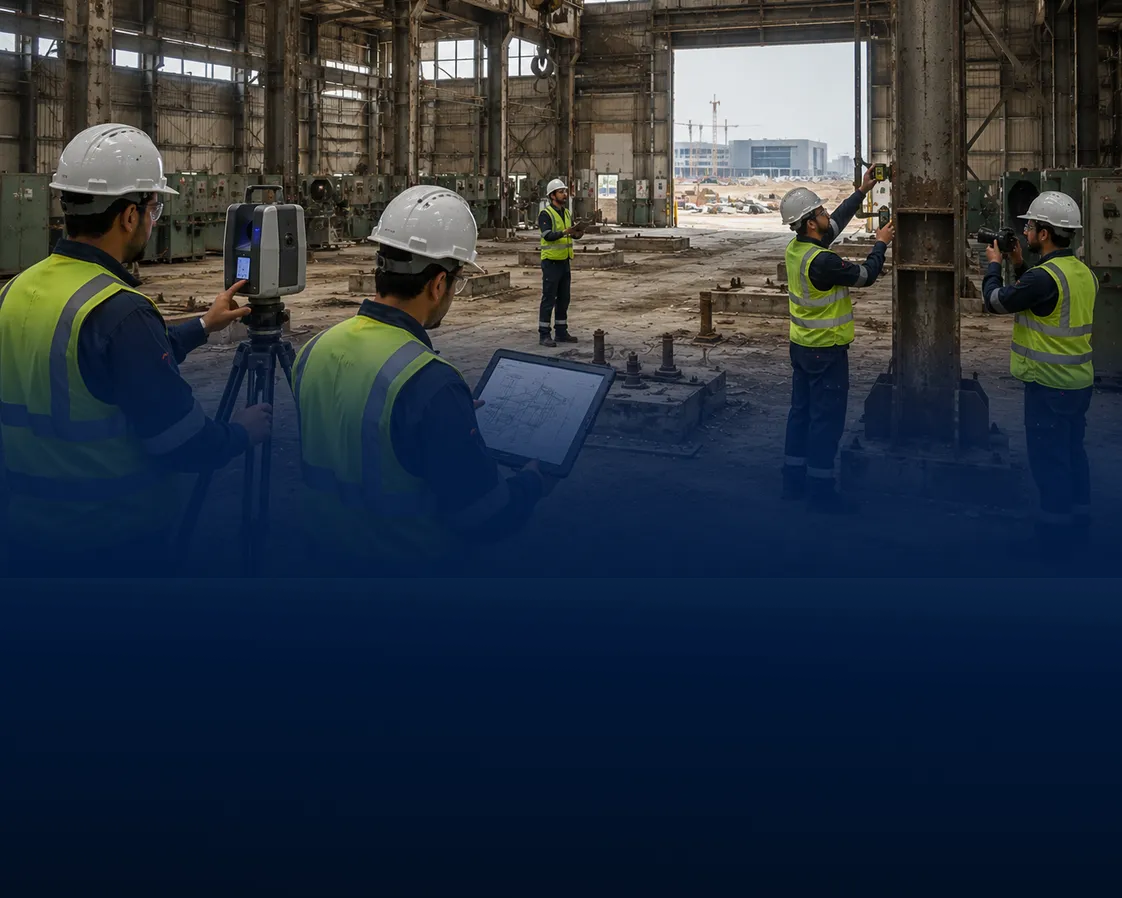
Legacy Facility Clearance
Disused or orphaned crane infrastructure in old industrial sites — often with incomplete documentation, requiring more conservative survey and engineering before work can start.
- Incomplete documentation
- Conservative engineering
- Vision 2030 redev sites
Five disciplined phases. Survey to surface, manifest to certificate
Every clearance project runs through the same five phases, from the initial survey to the final handover certificate. Each step is checked and documented, with hazmat handling and waste tracking built into every phase.
Site Survey & Utility Mapping
- Topographic and structural survey of the existing condition
- GPR scanning to identify buried utilities and underground services
- Hazmat sampling — paint, brake linings, transformer oils, contaminated concrete
- Adjacency review — operating equipment, occupied buildings, public roadways
- Approval gate: scope-of-removal map signed off before method statement work
Method Statement & Permitting
- RAMS authored against client and Civil Defence permit requirements
- Hot work permits, demolition permits, hazmat handling licences obtained
- Oversize-load route permits coordinated with Saudi authorities
- Waste manifest design — every kg accounted for from cut to scrap yard
- Approval gate: full permit pack signed off before mobilization to site
Mobilization & Hazard Containment
- Cutting equipment, mobile cranes and waste skips mobilised to site
- Exclusion zones, fire watch, fume extraction and dust suppression deployed
- Hazmat enclosures erected where regulated material will be disturbed
- Toolbox briefings, PTW activation, daily HSE walkdown protocol initiated
- Adjacency interface confirmed with operations before any cutting starts
Sequenced Removal & Demolition
- Steel sectioning and cropping per the engineered cut plan
- Mobile-crane-supported lower of every section — no controlled drops without engineering
- Concrete foundation breakout, anchor bolt extraction, embedment plate removal
- Auxiliary equipment stripping with electrical isolation verified at each step
- Daily weighbridge ticketing and waste manifest reconciliation
Site Restoration & Closeout
- Surface restoration, concrete patching, paving and line-marking to specification
- Drainage flow verification, settlement check, photographic record of finished state
- Final waste manifest reconciliation, scrap-rebate accounting, regulatory close-out
- Handover certificate signed by client representative and Veltrixair Industries project director
- PDPL-compliant digital archive of full project record retained for client access
Cleared to international demolition standard, regulated to KSA waste law
Site clearance touches construction, demolition, hot-work and waste-management rules all at once. Every project we run is engineered, delivered and closed out against the standards below, with all permits and paperwork kept for the required period.
Your site restored before we leave the gate
Most contractors clear the steel and leave — the waste paperwork becomes your problem, drainage doesn't get checked, the surface stays unfinished. We treat clearance as a proper closeout: the site is ready for the next phase the day we hand it back, and the paperwork holds up to an audit years later.
One project director from first bolt to handover certificate
When clearance follows directly on from a Veltrixair Industries dismantling engagement, there is no re-mobilization, no scope-gap hand-off, and no "the previous contractor said it was their problem." Same project director, same lift director, same engineered sequence — extended into the clearance phase.
Torch, plasma, mechanical shear and hydro-demolition
Heavy steel cutting (oxy-fuel and propane-oxygen torch, plasma cutting, mechanical shear, hydraulic cropping) and concrete demolition (pneumatic breaking, hydro-demolition, controlled pulverisation) are delivered with our own equipment and crews — not sub-contracted to third-party demolition firms.
Saudi Maaten compliance, weighbridge to certified processor
Every kilogram of removed material is accounted for from the cut to the scrap yard — alloy classification, weighbridge tickets, certified processor delivery, and rebate-credit reconciliation against contract. The waste manifest survives a regulatory audit five years later.
Cutting steel adjacent to operating production lines
Removing crane structures alongside live equipment requires meticulous interface management — isolated work envelopes, frequent permit cycles, hot work coordination with operations control rooms. We've executed phased clearance in plants where production never paused.
Four restoration outcomes
Being cleared isn't the same as being ready. Removing a structure always leaves a footprint — what matters is what state that footprint is in when the contractor leaves. We hand back four specific things on every project.
Surface Restored
Concrete patched, paving repaired, line-marking restored — flush to specification with no protrusions, no trip hazards and no anchor remnants.
Drainage Verified
Site drainage paths cleared and verified for flow — no ponding, no blocked grates, no contaminated runoff. Drainage check witnessed and photographed.
Documentation Pack
Waste manifests, scrap weight tickets, photographic record, hazmat disposal certificates and regulatory closeout — assembled as a single PDPL-compliant digital pack.
Handover Certified
Signed-off site state with regulatory closeout, ready for next-phase work — whether that's new crane installation, building modification, or full site redevelopment.
Need to clear the site, not just the steel?
Whether it's removing one crane structure in a Riyadh factory, decommissioning multiple cranes at a Jubail plant, or clearing an old facility for redevelopment — tell us the scope, and we'll be on site within five working days, with a proposal to follow.