Controlled dismantling, engineered in reverse
Veltrixair Industries takes cranes apart with the same discipline we bring to installing them. We plan every lift in reverse sequence, handle hazmat carefully, supervise with certified riggers, and close out every regulatory step. Whether it's a 5-tonne workshop crane at end-of-life or a 200-tonne process crane during a plant move, one team owns the mechanical, electrical and HSE work.
Dismantling is risk management, before it is mechanical work
Aged equipment doesn't behave like new equipment. Corrosion, fatigue, undocumented changes and missing maintenance records all mean the original design may no longer match what's actually on site. That's why Veltrixair Industries plans every dismantling project around four risk categories before touching the first bolt.
Structural Collapse
Aged or corroded structure may have lost design capacity — conservative engineering is mandatory.
Personnel Safety
Working at height with deteriorated equipment, in often live operational environments adjacent to production.
Environmental Hazards
Legacy cranes may contain PCBs, asbestos brake linings, hydraulic fluids and lead-based paints requiring regulated handling.
Business Continuity
Dismantling is often executed during plant turnarounds with surrounding production active — minute-by-minute coordination matters.
What's included in a Veltrixair Industries dismantling
We deliver dismantling as one accountable project — not split across sub-contractors where the rigger leaves before the power's properly isolated, or hazmat becomes your problem. Here's what's standard on every end-of-life, replacement or relocation project.
Pre-dismantling assessment & condition survey
Walk-down with photographic record, structural condition assessment, OEM documentation review (where available), and identification of out-of-design modifications or repairs.
Hazmat identification & handling plan
Inspection for PCB-containing transformers, asbestos brake linings, lead-based paints, hydraulic and gear oils — with a regulated disposal plan and waste manifest design before work begins.
Reverse-sequence lift plan engineering
Detailed lift study working backwards from current installed state — component weight verification, mobile crane sizing, rigging gear selection and exclusion zone mapping.
Energy isolation & lockout/tagout
Full electrical de-energization, mechanical brake isolation, hydraulic pressure release and OSHA 1910.147-compliant LOTO procedure with documented lock register and verification testing.
Component weight verification
On-site weighing of critical components where original spec is unavailable or suspect — load cells, calibrated rigging, and conservative weight assumptions documented in the lift plan.
Rigging design for unknown-condition equipment
Rigging gear sized with conservative safety factors above SWL standard, certified slings, shackles and spreader bars, with rigging plan reviewed by certified Lift Director before each pick.
Electrical de-energization & cable removal
Power feed disconnection at upstream isolator, conductor bar or festoon system removal, cable salvage where feasible, and earthing continuity verification before mechanical work proceeds.
Sequenced mechanical disassembly
Reverse-installation sequence — hook block, hoist, trolley, bridge girders, end carriages and runway beams — each picked, lowered and laid down per the engineered sequence.
Component transport & laydown
Site logistics including laydown yard preparation, internal transport, road permits for oversize loads, and delivery to designated storage, scrap yard, or refurbishment partner.
Structure removal (where in scope)
Runway beams, columns, gantry frames and supporting steel — removed and transported per the same engineered sequence. Hand-off to Site Clearance scope where the work continues.
Site restoration & foundation breakout
Foundation breakout to client specification, embedment plate removal, anchor bolt cropping, surface restoration, and HSE-compliant waste removal — leaving the site ready for new work.
Documentation, regulatory closeout & disposition
End-of-life certification, asset register removal from facility records, hazmat disposal manifests, regulatory body notifications (where required), and asset disposition handover.
Six reasons cranes come down
Why a crane is coming down shapes how we plan and sequence the work. We handle the full range — from a simple end-of-life takedown to a complex multi-crane replacement while a plant is still running.
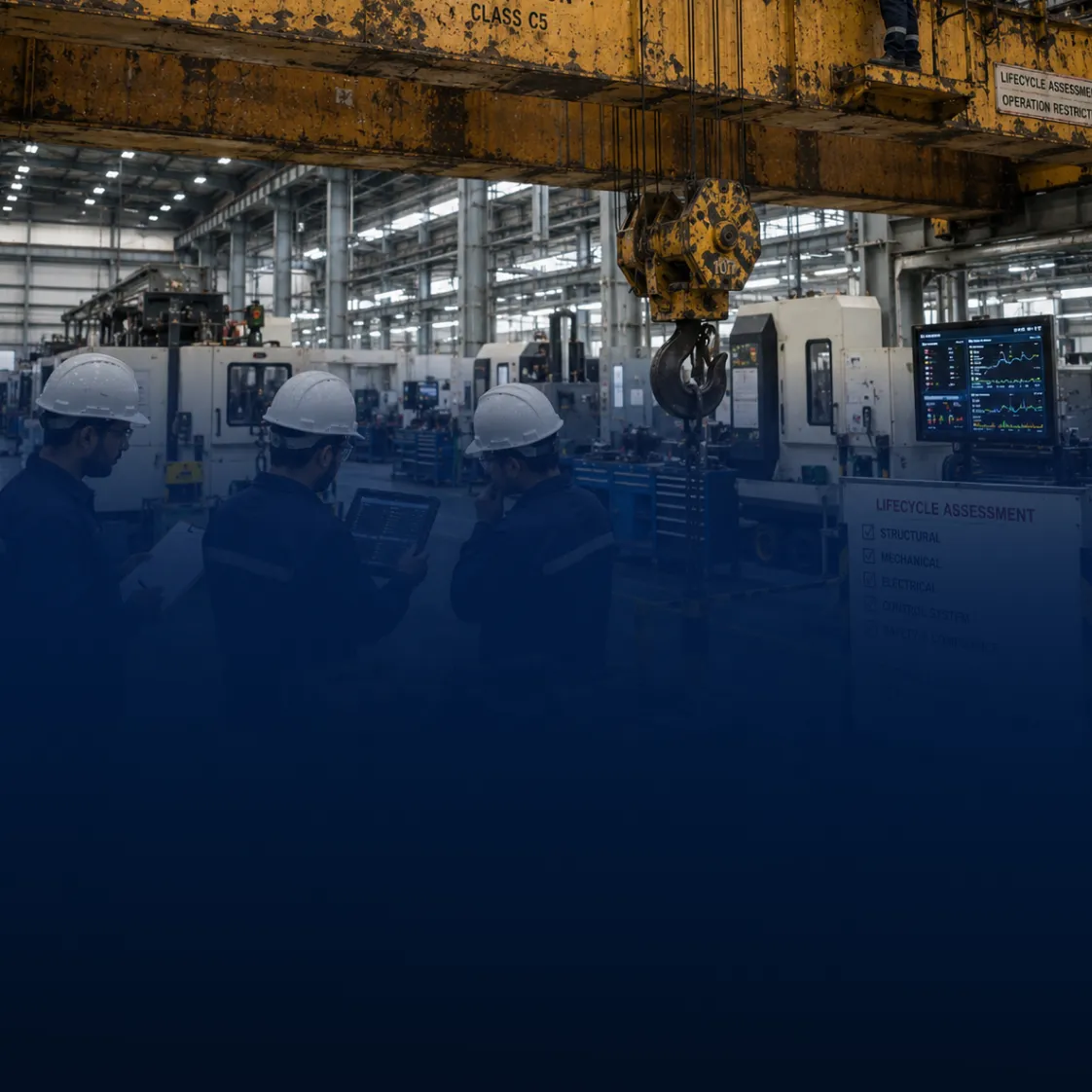
End-of-Life Equipment
Crane has reached or exceeded its design service life — typically 20-30 years for industrial duty-class cranes — and economic refurbishment is no longer viable.
- Design life expired
- Refurbishment uneconomical
- Insurance / HSE driven
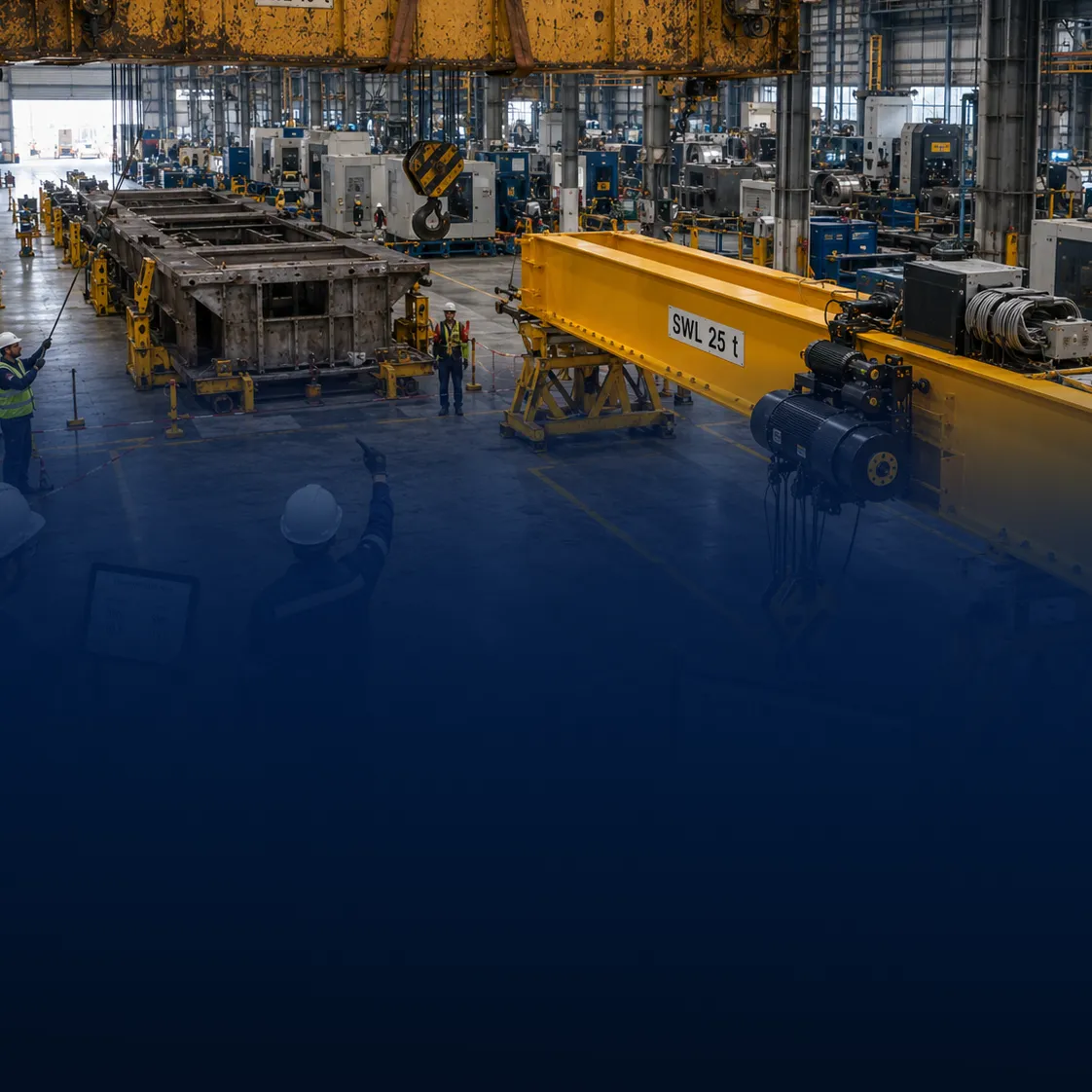
Capacity Upgrade Replacement
Production demand has outgrown the existing crane — replacement with a higher-capacity unit requires the original to come down before the new one can go up.
- Production scaling
- New product line
- Process intensification
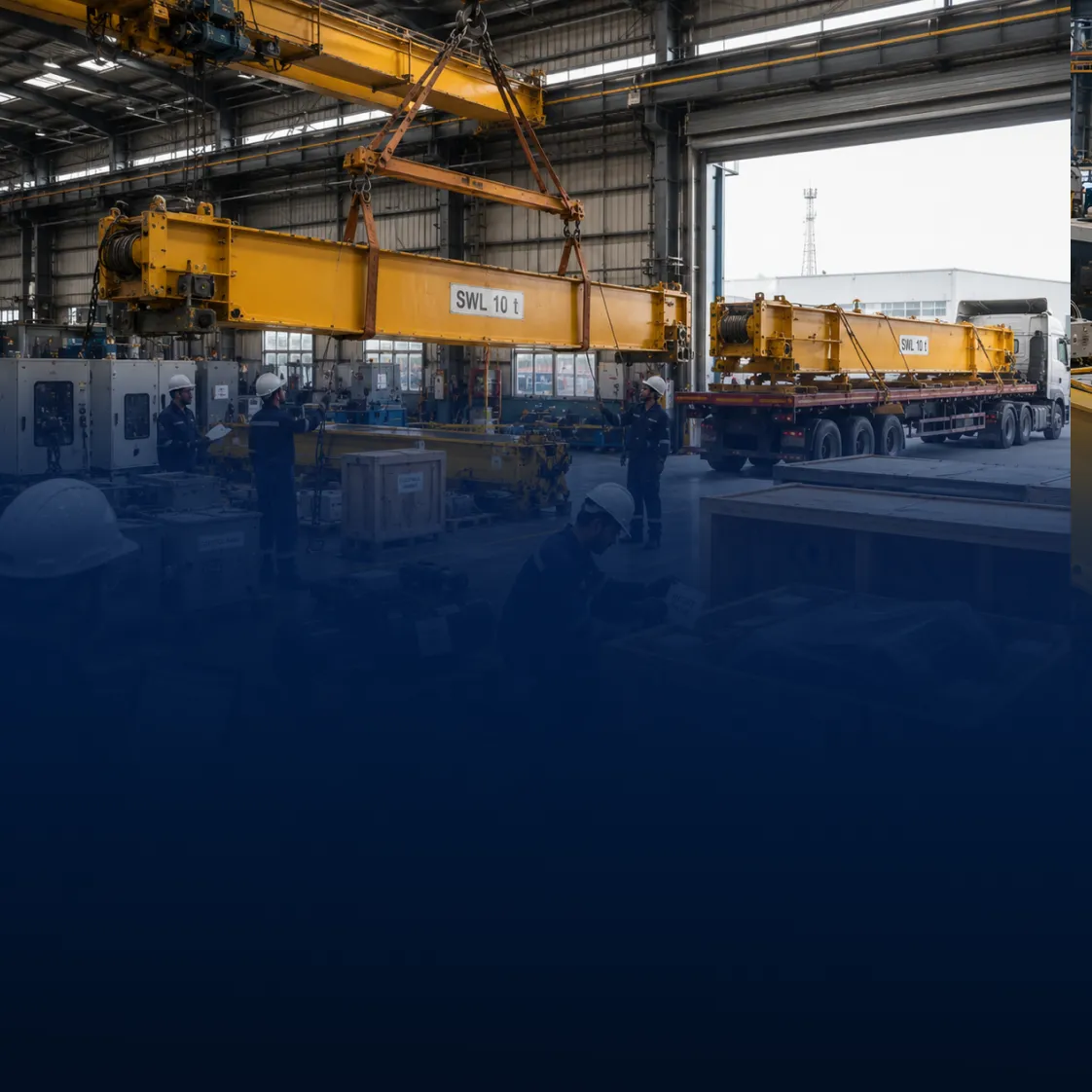
Plant Relocation
Equipment is to be moved to another site — either within KSA or for export — and must be carefully dismantled, crated, transported and reinstalled.
- Inter-site transfer
- Plant consolidation
- Asset sale / export
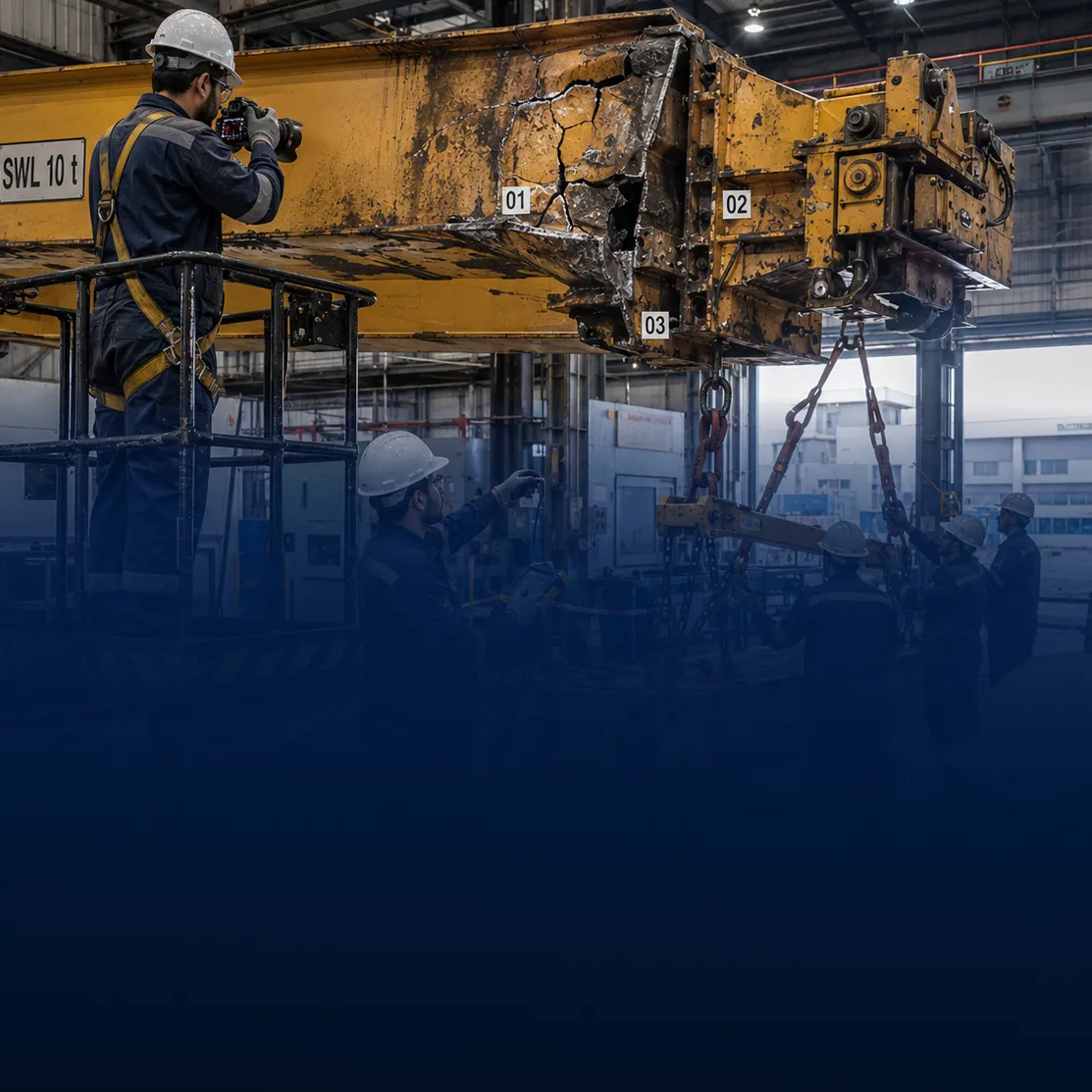
Damage / Structural Failure
Post-incident removal following overload, collision, fire, or fatigue failure — typically time-critical, often regulated, and always documented for insurance and root-cause review.
- Insurance / forensic
- Time-critical execution
- Root-cause documentation

Full Plant Decommissioning
Entire facility shutting down — dismantling forms part of a broader site decommissioning programme, often with multiple cranes, supporting steel and ancillary equipment.
- Multi-crane scope
- Coordinated programme
- Integrated with civil works
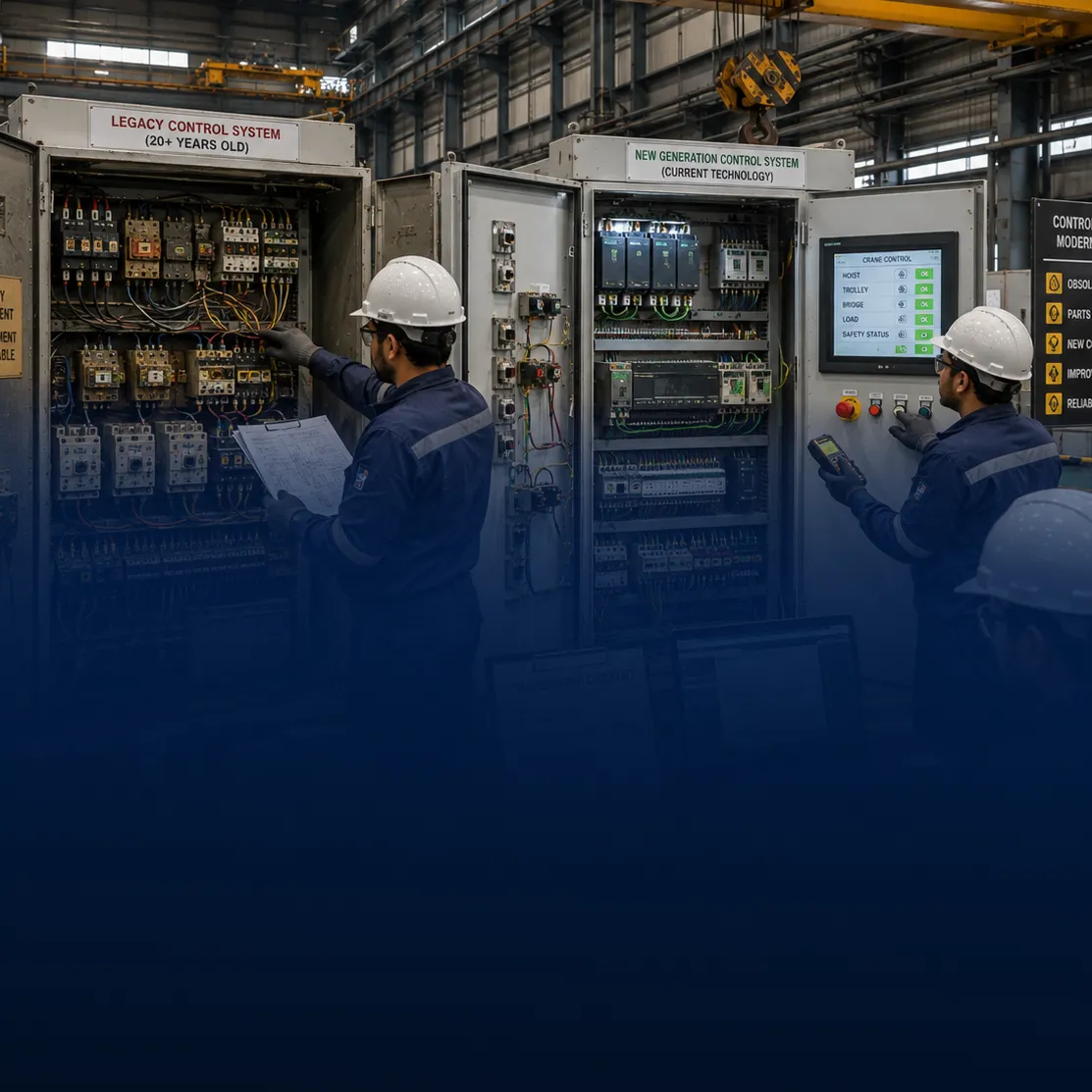
Technology Replacement
Existing crane being replaced by a current-generation equivalent — typically driven by control system obsolescence, parts availability, or new compliance requirements.
- Obsolete control systems
- Parts EOL from OEM
- New compliance regime
Five disciplined phases. Reverse-engineered, never improvised
Every dismantling project runs through the same five phases. Each one is checked, witnessed and documented before we move to the next — nothing starts until the previous step is signed off and the lift plan is reconfirmed.
Pre-Dismantling Assessment
- Walk-down with photographic and video record of as-found condition
- Structural condition survey, weld and fastener inspection
- OEM documentation review and field verification of installed configuration
- Hazmat identification (PCBs, asbestos, oils, lead-based paints)
- Operating environment review — adjacent live equipment, exclusion footprint
Engineering & Lift Planning
- Reverse-sequence lift study working from current installed state backwards
- Component weight verification — on-site weighing where original spec is suspect
- Mobile crane sizing with conservative SWL margin above calculated loads
- Rigging design, exclusion zone mapping and HSE risk assessment
- Method statement, lift plan and PTW submitted to client / regulator for approval
Mobilization & Energy Isolation
- Mobile crane and rigging gear mobilised to site, exclusion zone established
- Toolbox briefing, lift plan re-confirmation, PTW activation
- OSHA 1910.147 LOTO procedure with documented lock register
- Mechanical brake isolation, hydraulic pressure release, fluid drainage
- De-energization verification with calibrated test instruments before mechanical work
Sequenced Dismantling
- Reverse-installation sequence: hook block → trolley → bridge → end carriages → runway
- Each pick witnessed by certified Lift Director with go/no-go authority
- Component lay-down per the engineered sequence — no improvised hand-offs
- Hazmat components segregated for regulated disposal at point of removal
- Daily HSE walkround and progress report against the lift plan
Site Restoration & Closeout
- Foundation breakout to specification, anchor bolt cropping, plate removal
- Surface restoration, waste removal and final HSE site walkdown
- Asset disposition execution — maintenance, scrap, salvage or storage transfer
- Documentation pack: end-of-life cert, hazmat manifests, regulatory notifications
- Asset register update and PDPL-compliant digital archive of project records
Dismantled to the same international standard as it was installed
Decommissioning is regulated work, just like installation. Every dismantling project is delivered, documented and closed out against the same standards — just applied in reverse.
Three asset disposition paths
Dismantling is about how the crane comes down. Disposition is about where it goes next. We handle all three common paths, and recommend the right one based on the crane's age, condition, value, and what you'd prefer.
Need to bring a crane safely down?
Whether it's an end-of-life crane in a Riyadh factory, a damaged crane needing careful removal, or a multi-crane plant shutdown in the Eastern Province — tell us the scope, and we'll be on site within five working days, with a proposal to follow.